A student posed me this question on my live chat, and what follows is the elaborated response for the purpose of sharing here.
Economic growth is associated with growth in economic output, most commonly recognised by the macroeconomic goal of sustainable and economic growth.
The rationale behind prioritising growth frequently cites the benefits to growth which includes:
- Better standards of living;
- Boosting expectations in prospects and therefore investments;
- And directly boosting the credence of the government through tangible income and employment growth (a.k.a politics).
More on the benefits to economic growth can be found in my set of free notes.
A “grow-at-all-cost” approach is one where the above are pursued without regard for any side-effects to economic growth, which may include:
Side Effects (Government)
Macroeconomic Conflicts
This occurs especially with economic growth associated with expansionary demand policies, which often causes inflationary pressures:
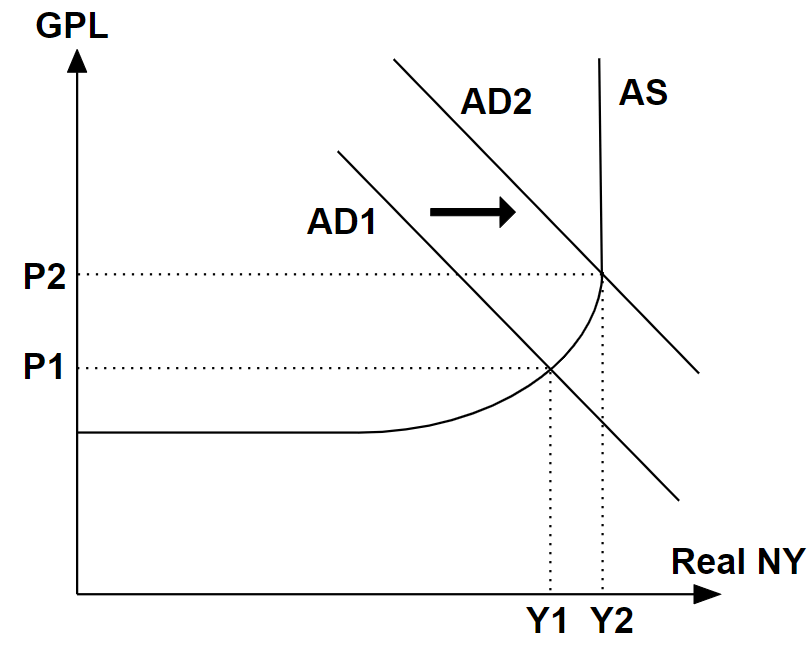
Read further about the macroeconomic conflicts due to economic growth in my set of free notes.
Reduction to Quality of Life
The growth to the economy may involve:
- Longer working hours and higher stress levels;
- Depletion of natural resources; and
- Higher levels of industrial byproducts such as emissions and waste.
These contribute to unsustainable growth that can ultimately worsen the quality of life and even impact long-term growth if the costs to aggresive economic growth outweigh the benefits that come with it.
Higher Inequality
It is known that growth, without due regard for its distribution, frequently leads to growth accruing mostly to the wealthy due to their favourable positions in taking advantage of economic opportunities.
“Growth-at-all-cost” is often observed to be one where growth fails to be “inclusive”, i.e. the growth benefits only a narrow segment of the population.
Additional Remarks
“Growth-at-all-cost” has a short horizon.
“Growth-at-all-cost” is seldom associated with patience for long-term growth, since its approach embraces fast growth as a priority.
So although it is possible to avoid macroeconomic conflicts with good levels of growth by utilising supply-side policies that improves the quantity and quality of resources, these tend to take too long in implementation to be considered when governments wish to pursue economic growth aggressively.
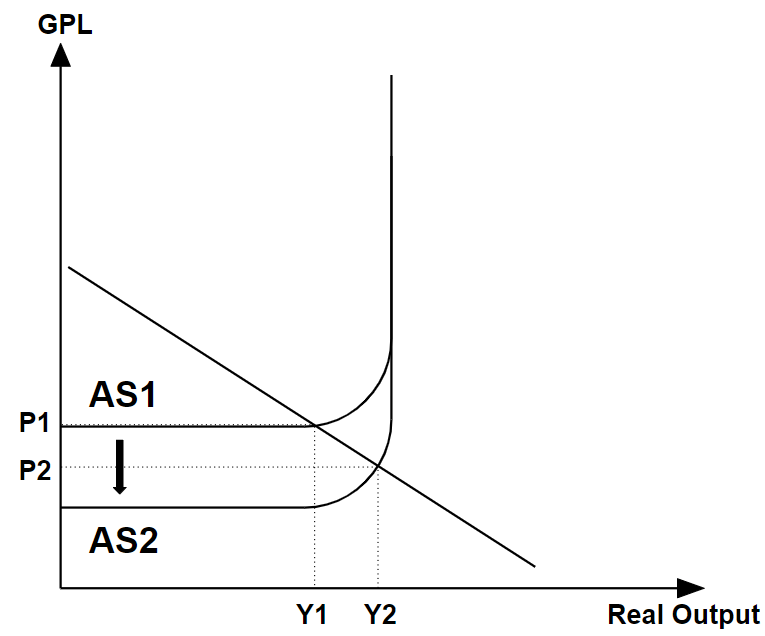
There is No Free Lunch.
Minimising any side-effects to pursuing economic growth requires conscious and specifically-designed counter-policies, such as stronger environmental protection, aggregate-supply-management and progressive social policies.
These in turn pose costs and trade-offs and often incur significant time-lag. Therefore even if “growth-at-all-cost” is problematic, it still exists in some form for as long as the government is willing to ignore or absorb the nasty effects.
 JC Econs 101